By Louise Jarrett
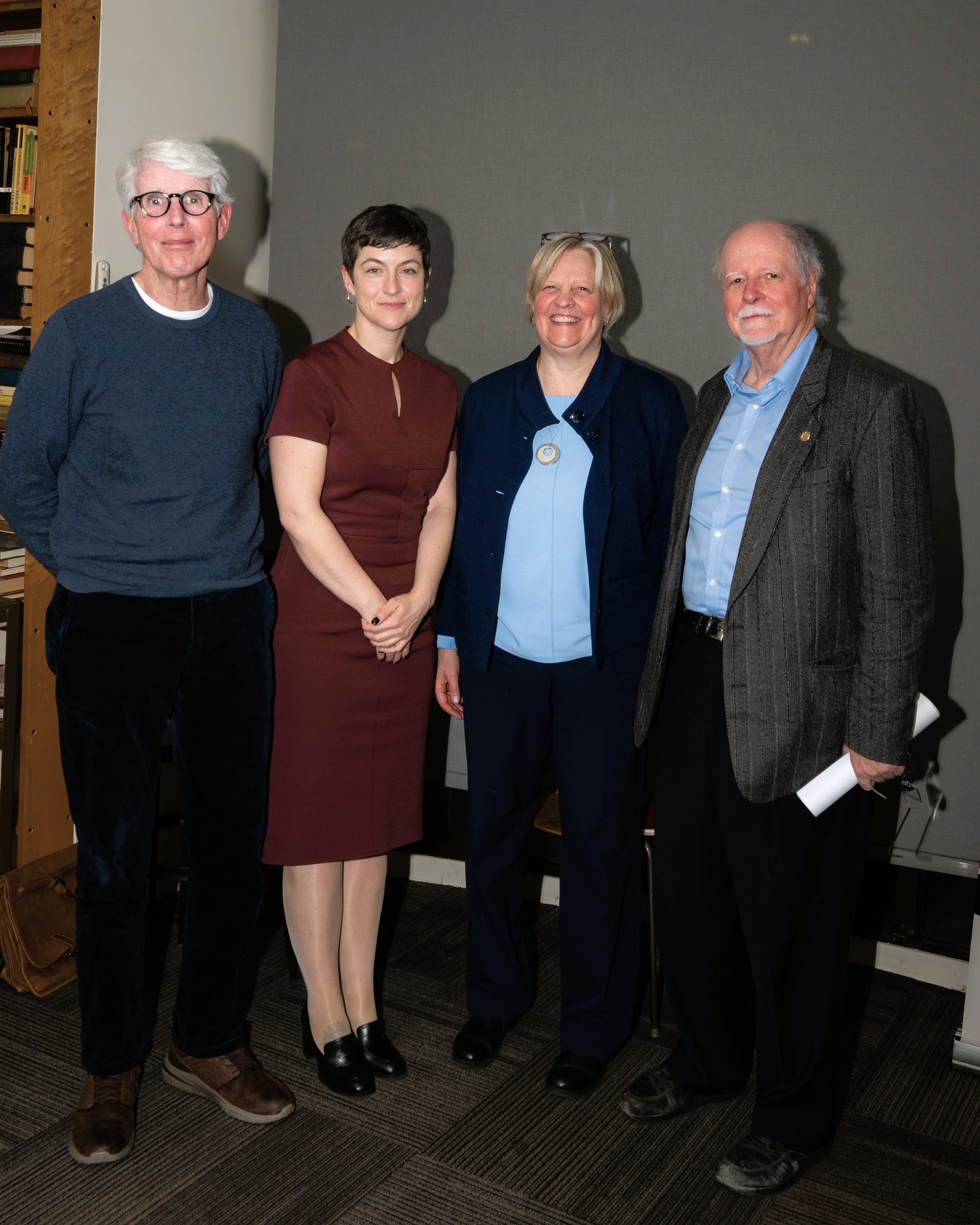
I emigrated from England to Canada, at the beginning of my twenties, to escape Thatcherism. Ten years later I “migrated” from Toronto to Quebec, where I have lived for 42 years. Not growing up in Quebec, the place has remained something of a mystery for me. I was very pleased to attend the interview with Dr. Mireille Paquet, on March 24 (Encountering the Other: Migration and Democracy) and learn more. Apparently, Quebec has a unique and interesting history of immigration.
Dr. Paquet, who was interviewed by Brian McDonough and Carol Fiedler, gave a very personal and lively account of immigration in Canada, in general, and Quebec in particular. She grew up in Sherbrooke: a really homogeneous part of the province. Her first real encounter with “the Other” was when a group of Yugoslavian refugees attended her high school. It was a seminal moment that led to her studying social sciences and focusing her research on immigration. Her interest grew out of her realization that these refugees were more like her than not like her: the Other was not other but the same.
Dr. Paquet stressed that there is generally “fuzzy thinking around immigration.” The terms migrant and refugee are often confused when they should not be. While there is no clear definition of what a migrant is, this is not the case for a refugee. An Administrative Tribunal, created after WWII, decides who has refugee status according to strict criteria. These criteria have changed to now account for violence on the basis of gender and sexual orientation. However, climate change and poverty, which are major causes of human migration, are not criteria for refugee status. “Economic refugees” is a relatively new term for an age-old problem.
Canada is unique in that jurisdiction over immigration is shared by the federal and the provincial governments. No other country in the world has this arrangement. Interestingly, and not surprisingly, Quebec is unique among the provinces: it receives federal funding for the integration of its immigrants. In Quebec, immigration is a package deal: it is inseparable from integration.
In the Duplessis era, Quebec was opposed to immigration. Following the Quiet Revolution, the province became very proactive on the issue. In 1968, the Department of Immigration was created and was based, rather significantly, in Montreal, rather than Quebec City.
Dr. Paquet explained how Quebec has experienced three waves of immigration. From the sixties to the nineties there was heated debate around the subject. From the nineties to 2012 there was a period of consensus: immigration was stable but growing. With the CAQ entering the political scene in 2012 and then coming to power in 2018, there was a radical shift. In order to distinguish itself from the Liberal Party and the Parti Quebecois, the CAQ sought to reduce the number of immigrants. Unfortunately, immigration is a wedge issue dividing the province today. While polls show that immigration is not something that preoccupies voters, it is increasingly the issue being politicized by the right wing movement. Traditional, moderate parties are forced to respond to the rhetoric around immigration and in the process become fractured. The constant reiteration of immigration as an issue means that, eventually, it becomes an issue. Sadly, this is where we stand today in Quebec, in Canada and in the world at large.
There is evidence that foreign interference is using the issue of immigration to divide and conquer. Our news routinely provides more opinions than facts. As Dr. Paquet expressed it, “we are living in a media echo-system.” Immigration is now beset by issues regarding policy cancellations, back-logs, delays and even concerns surrounding AI-generated documentation.
In the next five years Quebec will face an essential workers crisis. The demographic future of Quebec is in doubt. There is currently a 16-17 year delay for immigrants seeking to become Permanent Residents. This delay allows workers to be exploited for decades. One million residents of Quebec are about to lose their status as temporary workers. What will their fate be?
Listening to Dr. Paquet, I realized that I had been a Canadian immigrant in the Golden Age. My journey had been simple, with no roadblocks along the way. Canada is in a new, darker era now and immigration may never be straightforward again. As Democracy unravels, immigration will become a more divisive issue, but only if we allow it to.