By Louise Jarrett
Over many decades, courses that combine literature and film have proven very popular at the Thomas More Institute. Andrew Byers has designed and led many of these, including a course on Raymond Chandler, one on Henry James and the upcoming Graham Greene on Screen. This term, Friendship Through Fiction and Film was well attended and Shakespeare in the Spring is a TMI favourite.
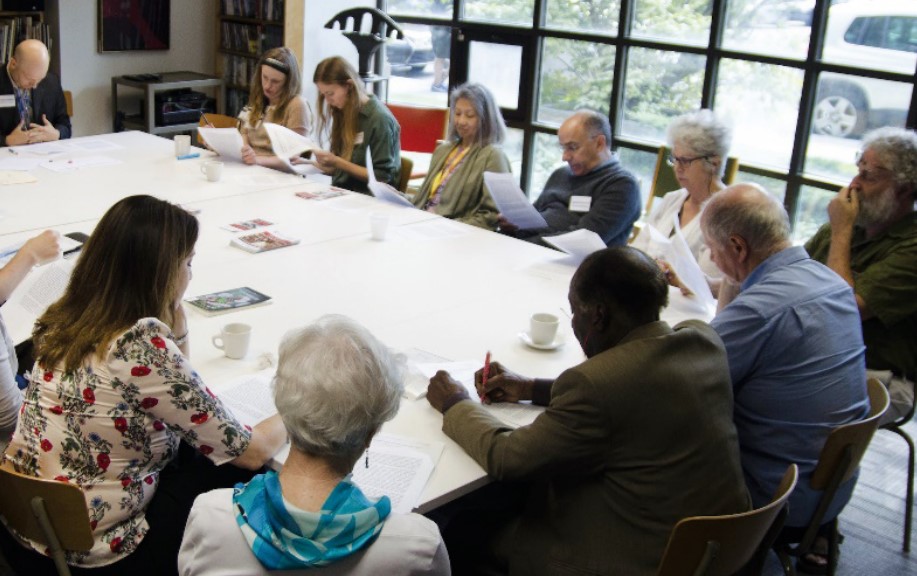
Including films in a course presents a particular dilemma: should the films be watched in class or should participants view them at home before discussing them? Andrew Byers believes that “watching films is a communal experience,” so he always shows the films in class. He feels that the “immediacy of watching together” makes the discussion more spontaneous. Furthermore, watching together is also “a reward for doing the required reading” and a welcome “change of pace” from the TMI discussion method.
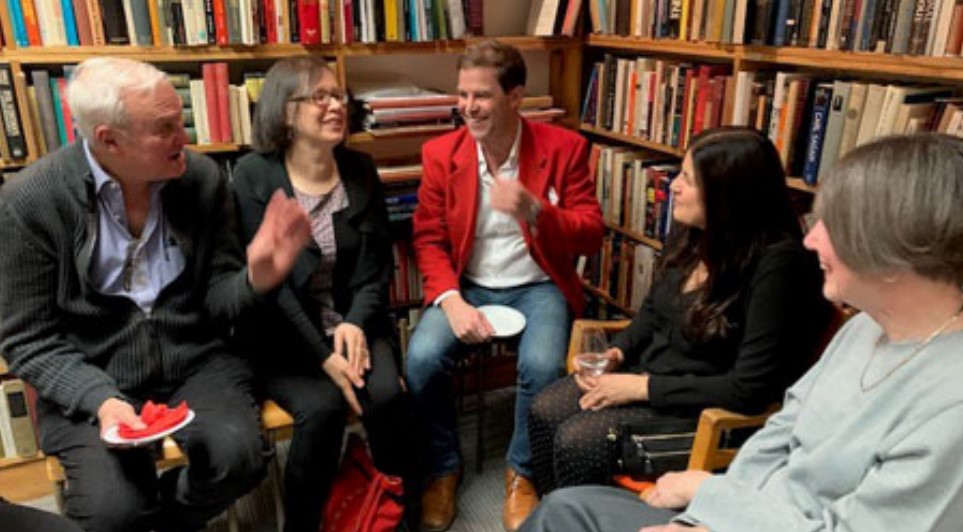
In the Friendship Through Fiction and Film course, participants watched the films at home via a streaming service. Interestingly, some participants elected to watch together at one location. This course has been rather unique as a group of friends registered together. They not only watched the films together, but offered lots of insights into friendship as one voice. When one member of the class could not access a film, she was invited to watch with a fellow classmate. This seemed in keeping with the TMI spirit of shared learning. Happily, the one man who signed up for the course continued, despite being seriously outnumbered. We have appreciated having a male perspective on friendship.
Asking people to watch movies at home does allow for more discussion time in class. Oftentimes, it is easier to hear at home than in a classroom. In a short survey of those taking Friendship Through Fiction and Film, the majority said that they preferred watching films at home. Participants also said that they experienced no discernible difference in discussing films as opposed to novels. This suggests that today, film really is just another form of text for most people.
In the case of this course, it was the topic of friendship that attracted people, rather than the novels and films selected. The majority of members of the class had never taken a course combining fiction and film before, and were unanimous in planning to do so again.
The Shakespeare in the Spring course provides short clips from films, courtesy of YouTube, during the discussions. This creates more work for the leaders, but can really enhance understanding and student engagement. Most fiction and film courses offer film versions of the texts read. If there is more than one film version, a difficult choice lies ahead. For Andrew Byers the choice is an easy one: always choose the original version, rather than a re-make and/or the version where the author has written the script.
In Friendship Through Fiction and Film, we read three novels and watched three films on the theme of Friendship. There were also weekly supplemental readings on current research. Each text revealed different aspects of what we now understand to be an extremely complex subject.
We live in a highly visual age, so it seems likely that courses offering literature and films will continue to appeal to members of the TMI community.
