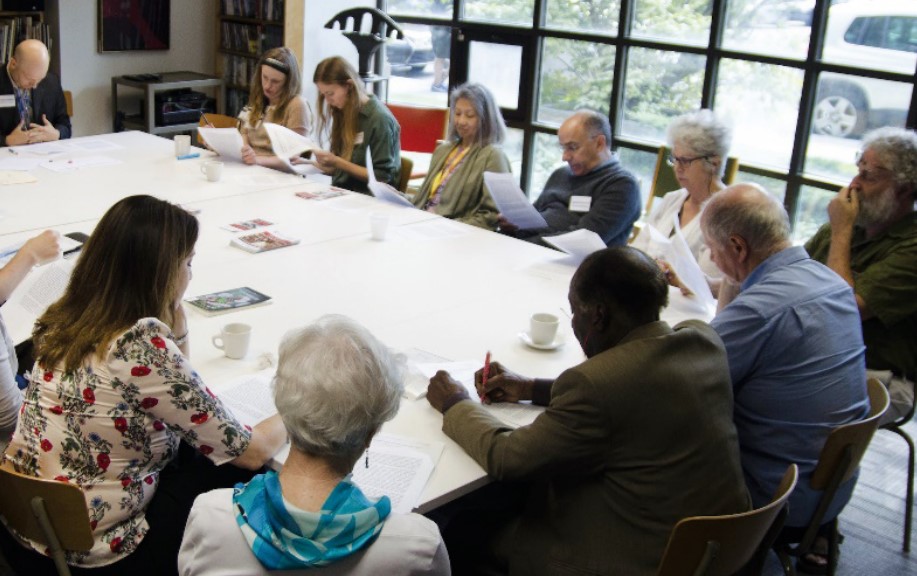
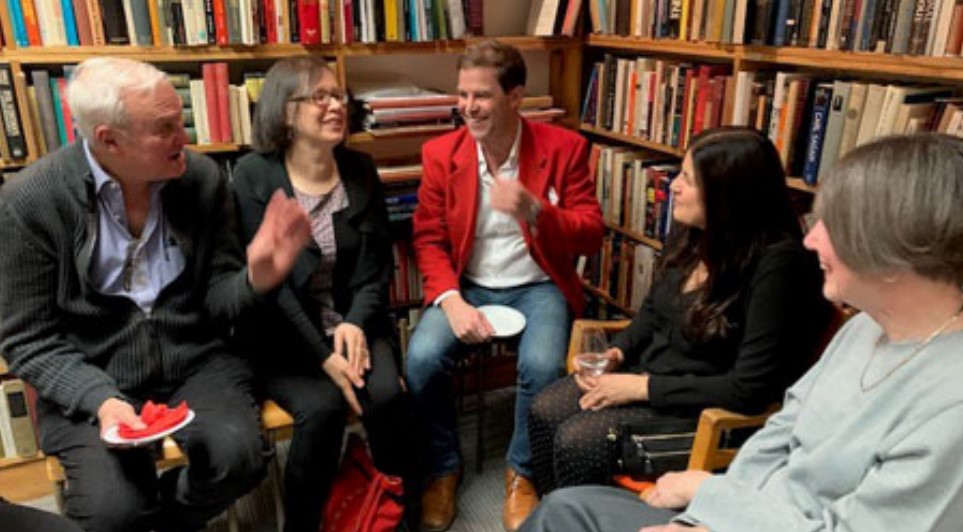
We are delighted to invite the public to the return of one of our signature events, which brings leading scholars into direct conversation with the public. The Spring interview series is held in an interactive format that pairs lectures with open discussion. It has long supported scholars, emerging scholars, and leading educators by offering a forum for exchange and connection with others in related fields of study.
This year’s theme, “Encountering the Other,” explores how we meet, understand, and learn from perspectives different from our own. Across four sessions, guest speakers will invite us to reflect on questions of migration and democracy, Indigenous visions of Canada, the role of dialogue in education, and the Thomas More discussion method that has guided 80 years of inquiry at the Institute. In an era marked by polarization and uncertainty, it is our hope that these conversations will offer a vital space for reflection, connection, and thoughtful exchange.
Click on an event title to see the full details and register, or click on “All-Event Pass” to purchase all four tickets at a discount!
March 4, 2026 – Encountering the Other: Migration and Democracy
Interview with Dr. Mireille Paquet, Associate Professor of Political Science and the Concordia University Research Chair in the Politics of Immigration
Interviewers: Carol Fiedler and Brian McDonough
As debates over immigration take center stage in democracies throughout the world, we will interview Mireille Paquet about the stakes of immigration policy in the Canadian and Quebec context.
How are Quebec and Canadian societies responding in the face of increasing demagogic rhetoric against immigrants and refugees, while at the same time recognizing the economic need for new citizens, on the one hand, and the humanitarian need for refugees to enter safe, democratic societies on the other? How can a democracy contend with the pressures of demagogic rhetoric against immigrants, while also respecting the sincere concerns of Canadian citizens over resources and social cohesion? Is this issue particularly challenging for Canada because of its commitment to multiculturalism, its desire to respect its relations with First Nations peoples, as well as the concerns of its two founding peoples? How can a modern democracy effectively balance the protection of its domestic interests with the ethical imperative to welcome those seeking refuge?
Update: Thank you to everyone who attended! You can view a recording of the event on our Youtube channel here.
April 1, 2026 – Encountering the Other: Visions of Canada from an Indigenous Centre
Interview with Dr. Niigaan Sinclair, professor at the University of Manitoba, writer, and columnist for the Winnipeg Free Press
Interviewers: Matte Downey and Christine Jamieson
In this session, Niigaan Sinclair will discuss his recent book, Wînipêk: Visions of Canada from an Indigenous Centre. Described as a “beacon on the path to reconciliation,” Wînipêk offers a narrative of both hardship and profound resilience, re-orienting our understanding of the country from its geographic and cultural heart. Dr. Sinclair challenges us to look beyond the periphery and understand the story of Canada through an Indigenous lens, moving past mere acknowledgement toward genuine restoration. As we explore the themes of history, place, and relationship, the discussion will be guided by one overarching question: Guided by the principles of reconciliation, how might we imagine and shape a shared future together in a “good way”?
Update: Thank you to everyone who attended! You can view a recording of the event on our Youtube channel here.
April 15, 2026 – Encountering the Other: Dialogue and Education
Guest Panelists:
– Jessica Riddell, Professor of Early Modern Literature (Bishop’s University)
– Eva Pomeroy, Affiliate Assistant Professor of Applied Human Sciences (Concordia University), Research Lead and Senior Faculty (Presencing Institute)
Interviewer: Rina Kampeas
This panel will explore whether our traditional stances toward education inadvertently limit our openness to new ideas, stifling the critical reflection necessary for growth. This session moves beyond the mechanics of teaching to investigate the philosophy of the encounter itself—how meeting a mind different from our own challenges our assumptions. We will look at how the power of dialogue can re-envision the educational experience, transforming it from a static transfer of knowledge into a dynamic, shared evolution. By examining the barriers we erect against uncomfortable or foreign concepts, we aim to address a vital pedagogical problem: Can discussion be elevated from a mere exchange of conflicting opinions to the type of informed, vulnerable dialogue that leads to genuine insight?
April 29, 2026 – Celebrating 80 Years of Encounter Through the Thomas More Discussion Method
Interview with course leaders at the Thomas More Institute
Course leaders: Valerie Amyot, Claire English, and Joseph Vietri
Interviewers: Irene Menear and Daniel Schouela
Experience dialogue in action! The first portion of the evening will be a discussion led in the Thomas More Institute style by Valerie Amyot, Claire English, and Joseph Vietri. We will discuss excerpts from Agnes Callard’s recent book Open Socrates: The Case for a Philosophical Life, which places importance on the “outer” space of conversation over the “inner” space of solitary thought. Please read the material that will be sent to you upon registration and come prepared to discuss!
In the second portion of the evening, two long-time members of the Thomas More Institute community, Irene Menear and Daniel Schouela, will interview course leaders Valerie, Claire, and Joseph on the experience of leading discussion and the connections they see between Callard’s work and what we do at the Thomas More Institute. By examining the ways we listen, speak, and interpret together, we will explore how respectful questions asked in community can enable us to attain insights we would not be able to reach in isolation.
Register for all four interviews: All-Event Pass