By Carol Fiedler
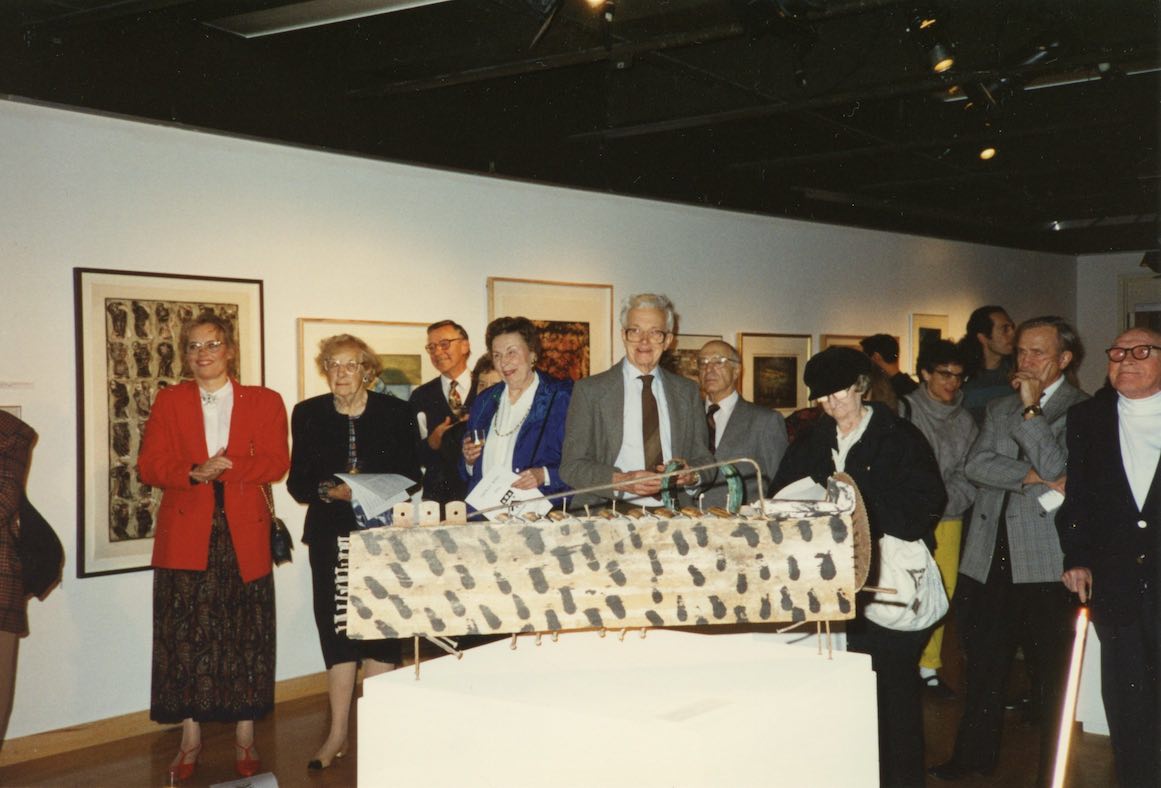
Have you ever admired the artwork that adorns the walls and shelves of the Thomas More Institute and wondered how a small non-profit academic institution acquired such beautiful works? For over forty years, from 1962 to 2008, the Thomas More Institute held an annual Exhibition and Sale of Art, organized by exceptional volunteers Martin O’Hara, Hedwidge Asselin, Uve Von Harpe, Cassie Cahoon, Tony Joseph, and others. The exhibition was known as an opportunity for young Quebec artists to show their work. Sarah Valerie Gersovitz, Tony Joseph told me, “participated in almost all of our TMI exhibitions. She was a famous and well-known Canadian artist whose name gave extra prestige to our exhibition and drew attention from other artists wanting to participate.” The exhibit also served as a fundraiser for the Institute. Should an artwork sell, a percentage of the profit would go to the Thomas More Institute, while the rest would go to the artist.
Hedwidge Asselin, who held a Ph.D. in philosophy and studied art history at the Sorbonne and McGill University, was engaged in the local art scene and knew many contemporary artists. Through her connections, the Institute was able to show important up-and-coming painters and sculptors. Quebec artists such as Louis Belzille, Sylvia Safdie, Luba Genush, and Fritz Brandtner displayed their works at the exhibition. Each show held a competition for the top prize, with the winning work purchased by the Thomas More Institute, thus contributing to its collection. The show was made possible by the hard work of the Associates, a committee of dedicated volunteers who worked to organize the academic and cultural events of the Institute (learn more about the Associates in our December 2025 edition of More News). Each year the art exhibition would be shown for ten days, often in such fine venues as the Lotto Québec premises. Lotto Québec was one of the biggest customers of the show, sometimes ordering five or more paintings. In the final exhibition in 2008, one year after her passing, several pieces of Gersovitz’s work were displayed in a separate space, in recognition of her extraordinary talent and her generosity to the Institute throughout the years.